Strategy Vs Planning: The Compass and The Map
Have you ever had the feeling that while you're crossing things off your never-ending to-do lists, you're not really moving closer to your major objectives? You may be conflating planning with strategy. Despite their frequent interchangeability, they have completely different functions. Strategy is your compass; it's how you pick your overall course, deal with turmoil, and adjust to ambiguity. Planning is your road map; it's the careful, methodical execution required to establish order and truly arrive at your goal. In the end, both are necessary for actual success: strategy makes sure you're climbing the correct mountain, and planning gives you the precise steps to reach the summit.
Have you ever faced a significant objective, such as starting a business, changing careers, or organizing your life, and been paralyzed by the question, “Where do I even begin?”
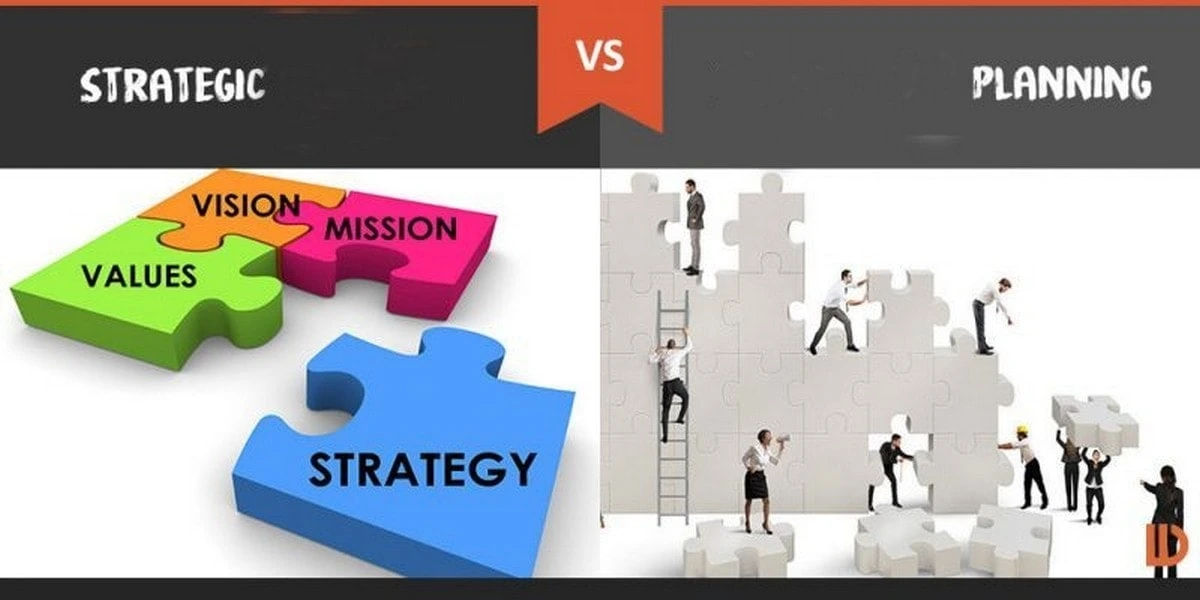
If you’re like the majority of people, you most likely took a seat, picked up a notepad, and began making a to-do list. But after a few weeks, even if you’ve crossed things off, you find that you haven’t really gotten any closer to your final goal.
Why does this occur? Usually, it’s because we’ve confused strategy and planning, two quite different ideas.
Although these two terms are used interchangeably in self-help books and boardrooms, they actually refer to rather different things. One is the north-pointing compass, while the other is the detailed route map.
Let’s explore the essence of how we accomplish our objectives and examine how understanding the distinction between strategy and planning may completely change the way you live.
Part 1: The Realm of Strategy (Embracing the Chaos)
Picture yourself at the edge of a gloomy, deep forest. You are aware that the mountain on the other side is your target, but you are unaware of the dangers, rivers, and dead ends that lurk in the shadows.
Strategy is how you survive the forest.
As one strategic thinker brilliantly put it: “Strategy is to chaos as planning is to order.”
The broad, high-level approach you take to accomplish long-term objectives in the face of complete uncertainty is known as strategy. The only reason a plan exists is because your circumstances are always changing. Since you cannot foresee the future, strategy is your capacity to evaluate values: What is most important? What do I have to give up? How can I set myself up to compete with others or overcome obstacles?
There is no strict A-to-Z order to strategy. It requires cognitive flexibility. It involves evaluating your personal strengths and limitations, comprehending the hazards in your environment, and establishing a course of action. Your approach needs to change if your surroundings do.
In short: Strategy is deciding where to go and why you are going there, all while dancing with the unpredictable.
Part 2: The Realm of Planning (Architecting the Order)
Now picture yourself at the foot of the mountain, having successfully navigated the forest. It is no longer foggy. Both the route and the peak are visible.
Planning is how you climb the mountain.
Planning lives on certainty, whereas strategy deals with ambiguity. Your approach encompasses the painstaking, detail-oriented process of planning.
Planning is the execution of strategy, if strategy is the vision. It is the process of coming up with particular actions: What must be done? Who will carry it out? How will it be carried out? What is the deadline?
Precision and control are key components of planning. It involves drawing a blueprint and making reality adhere to it. The finest plans are both deep (thinking through every little detail) and broad (including as many variables as possible). When you plan, you are arranging things to prevent chaos rather than responding to it.
In short: Planning is the tactical, step-by-step roadmap to reach the destination your strategy decided upon.
The Masterclass: A Tale of Two Masterminds
In order to fully comprehend this distinction, let’s examine an intriguing anime comparison between Lelouch from Code Geass and Light Yagami from Death Note, two intelligent, analytical minds confronting seemingly insurmountable circumstances.
It’s interesting to note that while both people purposefully lost their own memories, one did it as a strategy and the other as a plan.
The Strategist: Adapting to Chaos
Lelouch found himself trapped by an opponent named Mao, who could read minds. Lelouch couldn’t fight, couldn’t run, and couldn’t think of a plan because the moment he formed a plan in his head, Mao would read it. It was a situation of pure, unpredictable chaos with zero stability.
So, Lelouch didn’t plan. He strategized.
He recognized that his opponent’s greatest strength was certainty (knowing what Lelouch was thinking). To win, Lelouch had to become completely unreadable. He used his own power to wipe his memory right before walking into the confrontation. By forgetting his own objective, he fundamentally changed the environment. There was no step-by-step sequence; there was just one adaptable, decisive move that turned his opponent’s strength into a weakness. That is Strategy.
The Planner: Creating the Blueprint
Light Yagami, on the other hand, was under intense suspicion from a master detective named L. Light wasn’t reacting to sudden chaos; he had time, control, and a deep understanding of his opponent’s behavior.
Light didn’t just strategize; he meticulously planned.
He relinquished ownership of his notebook (wiping his memories of his crimes) as part of a massive, multi-step causal chain. By losing his memory, he would genuinely act innocent, clearing L’s suspicion, while an elaborate sequence of events he set in motion beforehand continued to unfold perfectly in the background. Weeks later, exactly as he predicted, he regained his memories and trapped his opponent. It was an orchestrated sequence where Step A led perfectly to Step Z. That is Planning.
Why You Need Both
Neither strategy nor planning is inherently better than the other. In fact, a successful life, business, or project absolutely requires both.
If you only have a strategy without a plan, you have a beautiful philosophy with no legs to stand on. You know what you want to achieve, but you’ll wake up every day without knowing what to actually do.
If you only have a plan without a strategy, you run the risk of beautifully and efficiently executing the wrong things. You might climb the ladder with incredible speed, only to realize it was leaning against the wrong wall.
As you move forward with your own goals, ask yourself:
- Do I have a Strategy? (Am I clear on my ultimate direction? Am I adaptable to the inevitable chaos? Do I know what my unique advantages are?)
- Do I have a Plan? (Have I broken this direction down into daily, actionable steps? Do I know who, what, where, and when?)
With your plan, embrace the turmoil. Use your planning to architect your order. There isn’t a place you can’t get to once the map and compass line up.