Why I’m Rethinking My Tauri + Rust Stack for Desktop Apps
1. Reducing software installer size does not equal reducing memory usage at runtime 2. WebAssembly enables compiled languages to bypass JavaScript performance bottlenecks in the browser 3. Progressive Web Apps solve the user's psychological need for "installable" software without desktop bloat 4. Frameworks like Tauri fix distribution bloat but still rely on resource-heavy system webviews 5. Hardware constraints force developers to understand the true architectural cost of their tools
Staring at the task manager of a dying Windows laptop is a brutal way to learn about resource consumption. Every megabyte of RAM felt like a precious commodity, and discovering that a simple chat application was hoarding half a gigabyte of memory felt like a betrayal. That hardware bottleneck forced me to abandon Windows for Linux, sparking a lifelong obsession with systems engineering and understanding exactly how every program on my machine actually runs under the hood.

Years later, that same obsession led me to a harsh truth about modern desktop development. A recent architectural breakdown I analyzed dismantled the illusion of lightweight apps, pointing out that we are essentially shipping a full web browser inside every application we build. It argued that the future isn’t about better wrappers, but abandoning installers altogether in favor of Progressive Web Apps (PWAs) powered by WebAssembly (WASM).
For a long time, my holy grail for desktop applications was Tauri paired with Rust. Coming from a backend development background, I despised Electron. Realizing that an Electron app was literally just Chromium bundled into a desktop icon went against every principle of lean engineering I had developed since my Linux days. When I found Tauri, it felt like freedom. It dropped the massive bundled browser and used the machine’s native webview instead. I honestly thought I had found the ultimate lightweight framework.
But reducing an installer from 80MB to 2MB is a magic trick that distracts from what happens when the app actually runs. The insight that completely shattered my assumption was realizing that the moment a Tauri app opens, it still loads the system webview. It still parses the DOM tree, spins up a layout engine, and boots a JavaScript runtime. You don’t eliminate the bloat; you just stop carrying it in your own backpack.
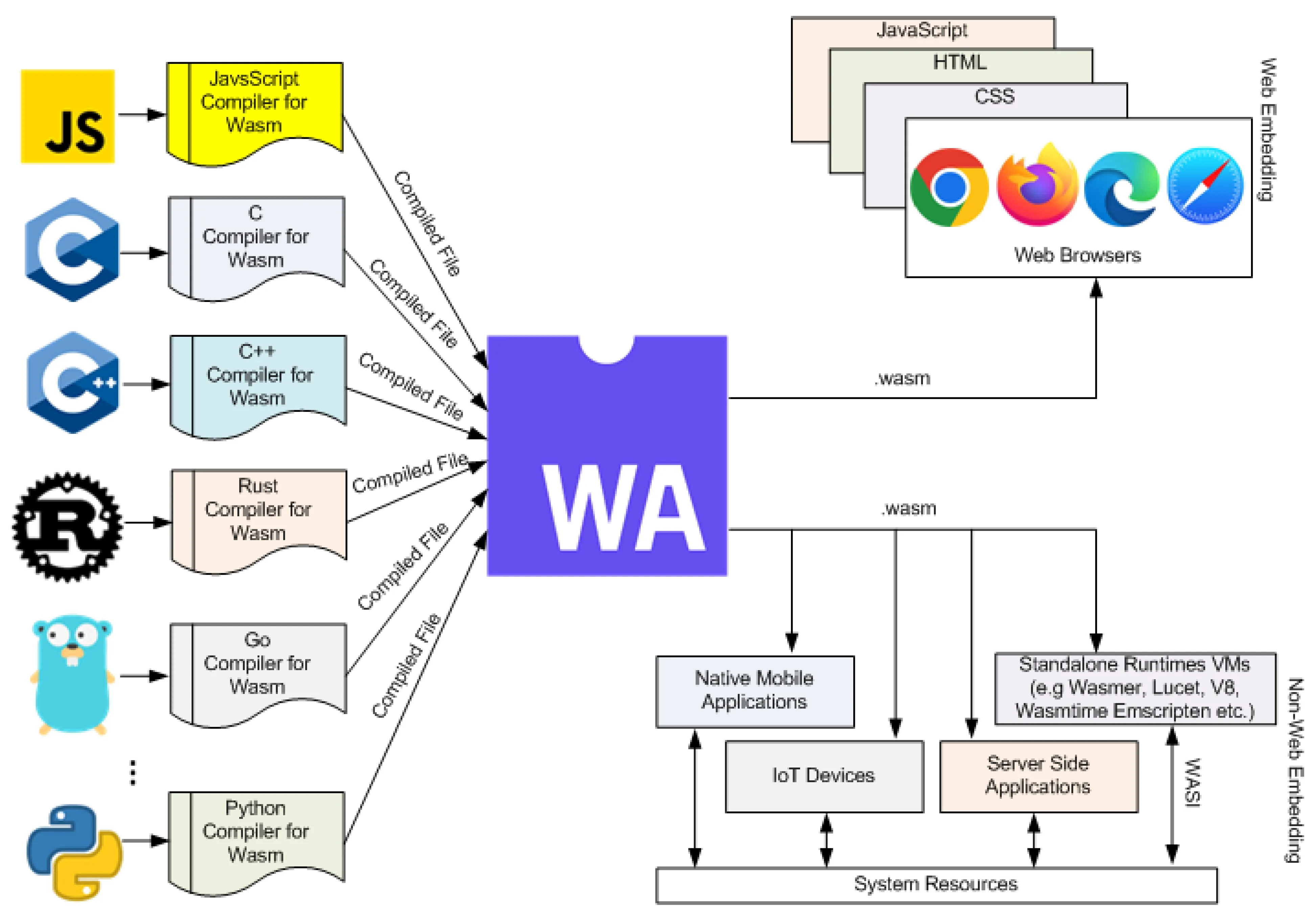
This is where WASM comes in. I originally learned Rust with the assumption that it was strictly for deeply optimized, hardware-level systems programming. I knew PWAs existed, but I always viewed them as just glorified browser tabs that needed a full browser to function. I hadn’t fully grasped that compiling Rust to a .wasm binary allows an application to run inside the browser at near-native speeds, completely bypassing traditional JavaScript bottlenecks. You get the raw performance of a compiled language with the instant, invisible distribution of a web page.
However, I refuse to buy the absolute gospel that this is the solitary future of all software. The material presents PWAs and WASM as the only logical escape from desktop bloat, but system architecture is rarely that black and white. There are other native solutions and lightweight GUI frameworks that solve the browser-bundling problem without forcing everything into the web ecosystem. The reality is that software development is about experimenting to find the right tool, not blindly following a single architectural dogma.
Knowing this, I am actively shifting how I approach my software architecture. Instead of defaulting to a Tauri wrapper just to get a desktop icon, I am going to evaluate if my applications actually need deep file system access or hardware hooks. If they don’t, I will build my next Rust project strictly utilizing a PWA and WASM architecture to see exactly how light and fast I can make it.
Look at the tech stack for the desktop application you are building right now. Open your task manager, check the cold start memory usage, and ask yourself if you genuinely need native OS APIs, or if you are just burning system resources to give your users a familiar icon on their desktop.